 Hokkaido Tours
Are Hokkaido Day Trips Worth It? An Honest Look
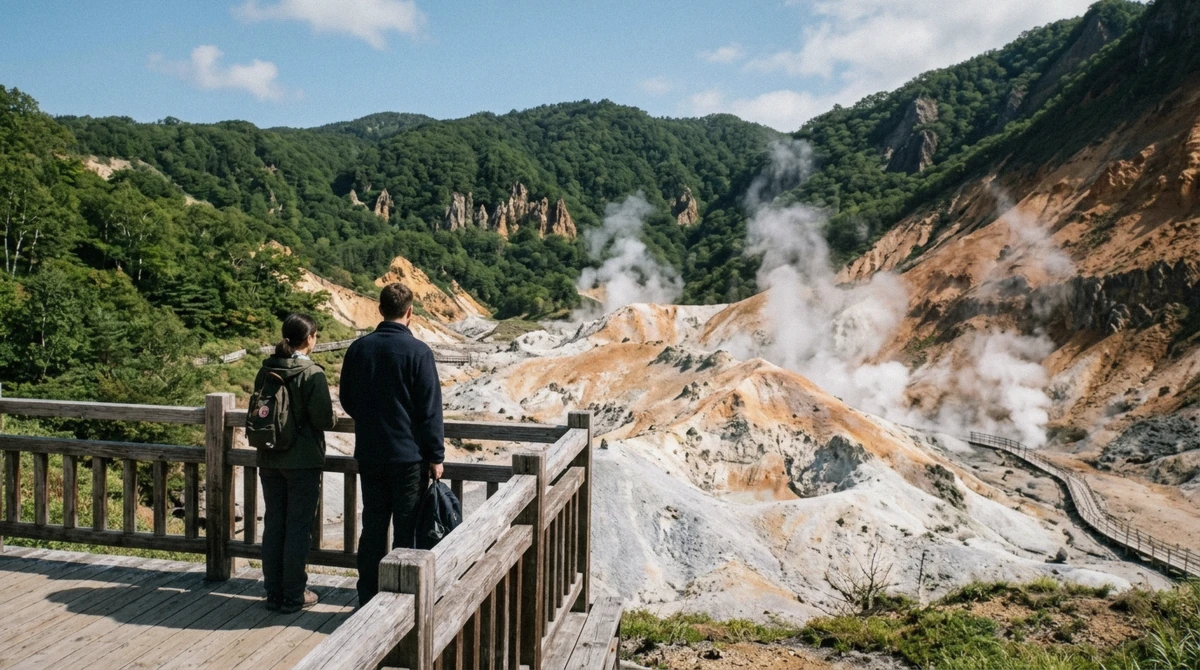
So, are Hokkaido day trips worth it? Yes, if you want to see Biei's flower hills, Noboribetsu's sulphur valley or Cape Kamui's cliffs and do not have a rental car or the days to spend getting there on your own. No, if long seated stretches, fixed meeting points and short stops at each stop would frustrate you more than the sights themselves would satisfy you. The tours we currently compare run $42.59 to $202.79 and take 9 to 11 hours, four to five of them in a seat on the northern routes to Biei and Furano. Below is the honest case for and against, without the marketing gloss.
Quick answer
Yes, if the sights are far apart and you don't want to drive; no, if you dislike four to five hours seated and short 20 to 30 minute stops. Prices run $42.59 to $202.79 for 9 to 11 hours, and the payoff is places like Shirogane Blue Pond and Noboribetsu's steaming crater floor reached without renting a car or piecing together seasonal bus timetables. The verdict below is built from the guided Hokkaido tours we compare, with their real prices and hours.
Key takeaways
- Prices run $42.59 to $202.79 for 9 to 11 hours, checked August 2026
- Reaching Asahikawa independently costs 5,440 yen each way in a reserved seat; the zoo tour is cheaper than that alone
- The most-booked day, Noboribetsu and Lake Toya, carries 331 reviews at 4.3, the largest sample in the catalog
- Only two of the nine tours include hotel pickup; the rest use a fixed meeting point
- Stops are short by design: the Blue Pond gets 20 to 30 minutes on most itineraries
- For the full price breakdown by tour, see Hokkaido day trip prices
The Short Answer
A conditional yes
A Hokkaido day trip out of Sapporo is worth it for a traveller who wants Biei, Furano, Noboribetsu or Cape Kamui without renting a car, and who accepts that a coach day trades lingering time for coverage. It is not worth it for a traveller who wants to move at their own pace, who has a rental car already, or who cannot sit through four to five hours of driving on the northern routes without it souring the day.
Worth it if
- You do not want to rent a car, especially in winter when packed snow and ground blizzards are routine on the Asahikawa road
- You have one clear day and want several landscapes covered rather than one place explored slowly
- You would rather pay $42.59 to $68 for transport and a guide than spend 10,900 yen round trip on trains to reach the same zoo alone
Skip it if
- You already have a rental car and want to set your own schedule at the Blue Pond or Farm Tomita
- Four to five hours seated on a coach genuinely ruins the day for you, rather than being a minor annoyance
- You need flexibility on timing, since every operator here states plainly that the vehicle leaves on time and does not wait
What a Day Actually Costs
Nine tours, one real spread
The full breakdown by tour, including what's included at each price, lives at Hokkaido day trip prices. In short: prices cluster between $42.59 and $68.44 for the sightseeing coaches, with a $202.79 outlier that bundles a lift pass and gear rental rather than competing on the same terms. Most tickets buy transport and a guide only; entrance fees and lunch are usually separate.
| Option | Typical price | Duration | Best for |
|---|---|---|---|
| Biei & Furano van | from $42.59 | 10 hours | Smaller group, flower season, best value |
| Asahiyama Zoo & Blue Pond | from $47.91 | 9 hours | Zoo ticket included, cheaper than the train alone |
| Noboribetsu & Lake Toya | from $46.59 | 10 hours | Hotel pickup, wheelchair accessible, runs year round |
| Otaru ski day | from $202.79 | 9 hours | Gear, lift pass and lesson bundled, not a sightseeing day |
What that spread means
The typical day trip here lands between $42.59 and $68, and the outlier ski day is a different product entirely, not a pricing anomaly on the same route. Reaching Asahikawa independently by rail costs 5,440 yen each way in a reserved seat, and since the timetable change every car on that line is reserved, so there is no cheaper unreserved fare to fall back on. A round trip alone runs close to 10,900 yen, and the Asahiyama Zoo tour at $47.91 already includes that transport plus the 1,000-yen admission.
On that specific route, the tour is the cheaper option, not the compromise.
What You Get for the Money
A typical northern day, start to finish
The pattern repeats across most of the catalog: a meeting point in central Sapporo before 08:00, then two to two and a half hours of driving north-east toward Asahikawa or the Biei hills. The first proper stop is usually Shirogane Blue Pond, a mineral-blue pool beside a stand of dead birch trees that reads as almost artificial in photographs and is not. Twenty to thirty minutes there, back on the bus, then Shirahige Waterfall or Shikisai-no-Oka's colour-banded flower fields, depending on the route.
Lunch, where it is included at all, tends to land mid-afternoon rather than at midday, and the drive back to Sapporo runs into the evening.
What's included, what isn't
Transport and a guide are the constant across all nine tours. Two of the nine also include an attraction ticket: the Asahiyama Zoo day covers the zoo's 1,000-yen admission, and both flower-route tours cover Shikisai-no-Oka's 800-yen gate. What's typically not included: lunch (excluded on six of the nine), the Mt Usu ropeway on the volcano circuit, the Blue Cave cruise on the coast day, and the Hill of the Buddha's 1,000-yen entry on the city day.
The full fee-by-fee list is at Hokkaido day trip prices.
| Included by default | Usually extra |
|---|---|
| Transport and driver-guide | Lunch, on six of the nine tours |
| Zoo admission, on the zoo tours only | Mt Usu ropeway, Noboribetsu circuit |
| Shikisai-no-Oka gate, on the flower tours only | Blue Cave cruise, Cape Kamui day |
| Free cancellation up to 24 hours | Hill of the Buddha entry, city day |
The Honest Downsides
Four to five hours seated, on the northern routes
Biei and Furano sit two to two and a half hours from Sapporo each way, so a round trip alone eats four to five hours of a nine- or ten-hour day. That is real time spent in a seat, not sightseeing, and it is the single biggest trade a coach day asks you to make.
Stops are short by design
The Blue Pond gets 20 to 30 minutes on most itineraries, which covers the boardwalk and a photo, not a slow walk around the water. Mt Usu-Shinzan's 80 minutes is the longest stop in the whole catalog and it is the exception, not the norm.
Meeting points, not always hotel pickup
Only two of the nine tours include hotel pickup: the Noboribetsu circuit and the Sapporo city day, both from the Sapporo TV Tower or the Sapporo Tokyu REI Hotel. The Biei van collects from hotels within three kilometres of Sapporo Station, which covers most of the central hotel belt but not Susukino's southern edge. Everything else means finding a fixed meeting point, often before 08:00.
The bus does not wait
Every operator states some version of the same rule: arrive on time or forfeit the fare. One listing is explicit that a no-show gets no refund. This is not negotiable on any of the nine, and it means building in margin on the morning of a tour rather than treating the pickup time as a suggestion.
A stop some travellers regret
The Noboribetsu circuit's review summary of 118 recent bookings names one recurring complaint: a bear-park stop that some travellers find uncomfortable and would rather see removed or replaced. It is skippable, but it is worth knowing about before you are standing there rather than after.
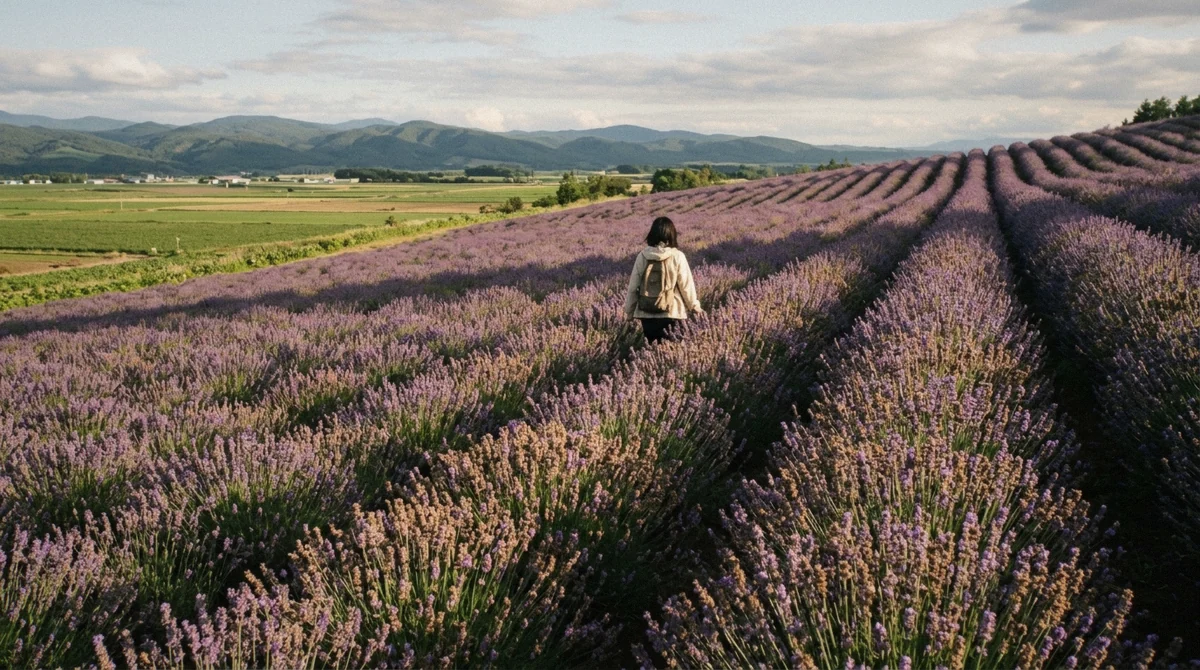
Furano in mid-July, the reason most travellers weigh whether a northern day trip is worth the seated time to reach it.
When a Day Trip Is Worth It Most
Timing, briefly
Mid-July, when Farm Tomita's lavender peaks between the 12th and the 22nd, is when the flower tours are worth booking most, if the crowds that come with it don't bother you. Late September into October trades peak colour for thinner queues and better light. For the full month-by-month case, including the thin months when several routes stop selling, see the best time to visit.
Who Should Book, Who Should Skip
If No rental car, want Biei or Furano
Book it. The sights sit kilometres apart on thin seasonal bus routes; a coach solves the logistics a train cannot.
If Already have a rental car for the trip
Skip it for the northern routes. Driving yourself opens the Patchwork Road and hilltop viewpoints no coach stops at.
If Visiting December through March, uneasy driving on snow
Book it. Ground blizzards on the Asahikawa road are routine, and the zoo tour states plainly that stops missed to snow-season traffic are not refunded, which is worth knowing either way.
If Want to move at your own pace at each stop
Skip it, or accept 20 to 30 minutes at the Blue Pond as the trade for seeing four or five places in one day.
If One clear day in Sapporo, want maximum coverage
Book the Noboribetsu circuit: pickup included, runs year round, and the most-reviewed day in the catalog at 331 reviews.
Doing It on Your Own Instead
It genuinely works on some routes
Independent travellers can still reach Otaru by local train in 35 minutes and see Sapporo entirely on foot and by subway. Biei and Furano are the harder case: the sights are spread across farmland kilometres apart, served by seasonal buses running a handful of times a day, which is where a rental car or a tour genuinely earns its price. The full route-by-route DIY breakdown, including train fares and the seasonal sightseeing trains, is at Sapporo to Furano and Biei.
How to Book Without Overpaying
Booking window and cancellation
All nine tours here carry free cancellation up to 24 hours before pickup and reserve-now-pay-later, so there is little cost to booking early and cancelling if plans change. Booking a week or so ahead is enough outside the peak lavender weeks in mid-July and the February festival period, when the popular departures go first.
Three tours matched to three audiences
For the tightest budget and flower season, the Biei and Furano van at $42.59 is the cheapest full day in the catalog. For the easiest morning, with pickup included and no meeting-point hunting, the Noboribetsu and Lake Toya circuit at $46.59 does the least amount of thinking for you. For the coast instead of the flower hills, the Cape Kamui and Otaru day at $51.76 is the only saltwater route in the catalog, though note the Blue Cave cruise itself is an add-on, not included.
One more thing before you book
If price is the deciding factor rather than the experience itself, read the fee-by-fee breakdown at Hokkaido day trip prices first; a cheaper sticker price sometimes costs more once the door fees are added in. For the full range of Hokkaido tour options side by side, the homepage breaks down all nine on price, hours and what each ticket covers.
Are Hokkaido Day Trips Worth It: Common Questions
How much does a Hokkaido day trip cost?
Between $42.59 and $202.79 per person, checked August 2026. Most sightseeing coaches sit between $42.59 and $68.44; see Hokkaido day trip prices for the full fee-by-fee breakdown.
How long does a Hokkaido day trip take?
9 to 11 hours door to door, of which four to five hours can be driving alone on the routes to Biei and Furano. The Sapporo city day and the Noboribetsu circuit involve less driving since they stay closer to the city or run a tighter southern loop.
Are Hokkaido day trips good for beginners or first-time visitors?
Yes. A coach removes the need to navigate seasonal bus timetables or drive on unfamiliar roads, which makes this the lower-friction option for a first visit to Biei, Furano or Noboribetsu.
Can I do Hokkaido day trips without a tour?
Partly. Sapporo and Otaru work well independently by subway and local train. Biei and Furano are harder without a car or a tour, since the sights sit kilometres apart on thin seasonal bus routes; see Sapporo to Furano and Biei for the full DIY case.
What is the biggest downside of a Hokkaido day tour?
The seated driving time on the northern routes, four to five hours out of a nine- or ten-hour day, and the short 20 to 30 minute stops at each place once you arrive.
Do Hokkaido day trips include hotel pickup?
Only two of the nine compared here: the Noboribetsu and Lake Toya circuit and the Sapporo city day, both from central meeting points. The rest use a fixed pickup location, and every operator states the vehicle leaves on time and does not wait.
What happens if the weather cancels a Hokkaido tour?
Stops can be dropped for weather rather than refunded on most listings; one operator is an exception and offers a full refund if you decline a weather-modified itinerary. All nine carry free cancellation up to 24 hours before pickup regardless.